
TGAM Articles
Generative Art Summit Berlin 2024
Franke’s “Oscillograms” (1954) served as the conceptual starting point of the conference. This landmark work, created with an analog computer crafted by a close collaborator of Franke’s, marked one of the earliest known explorations of generative form—years before digital systems reshaped artistic practice. The summit, structured across multiple days, traced this lineage, from the pioneering experiments of early computer artists to the most pressing questions of AI-driven authorship in the 21st century.
The Generative Art Summit convened over fifty invited guests of honor, uniting key pioneers of generative photography and digital art—figures such as Gottfried Jäger, Frieder Nake, Larry Cuba, and Christa Sommerer—with curators and researchers including Wulf Herzogenrath, Margit Rosen, and Grant Taylor. The presence of Anne and Michael Spalter, whose private collection of early computer art has become the most comprehensive of its kind, underscored the historical depth of the discussions.
Yet, beyond celebrating the past, the summit fostered critical cross-generational dialogue. Contemporary practitioners such as Sasha Stiles and Mario Klingemann engaged in discourse with the historical avant-garde, reflecting on the implications of AI, blockchain, and decentralized networks on creative practice. The questions at the heart of these discussions resonated with urgency:
- Who is the artist of the future—human or AI?
- How does copyright function in a decentralized digital world?
- What role does print hold in an art form built on algorithmic logic?
- How are museums and the art market adapting to generative aesthetics?
- Can artistic quality still be defined in an era of mass digital production?
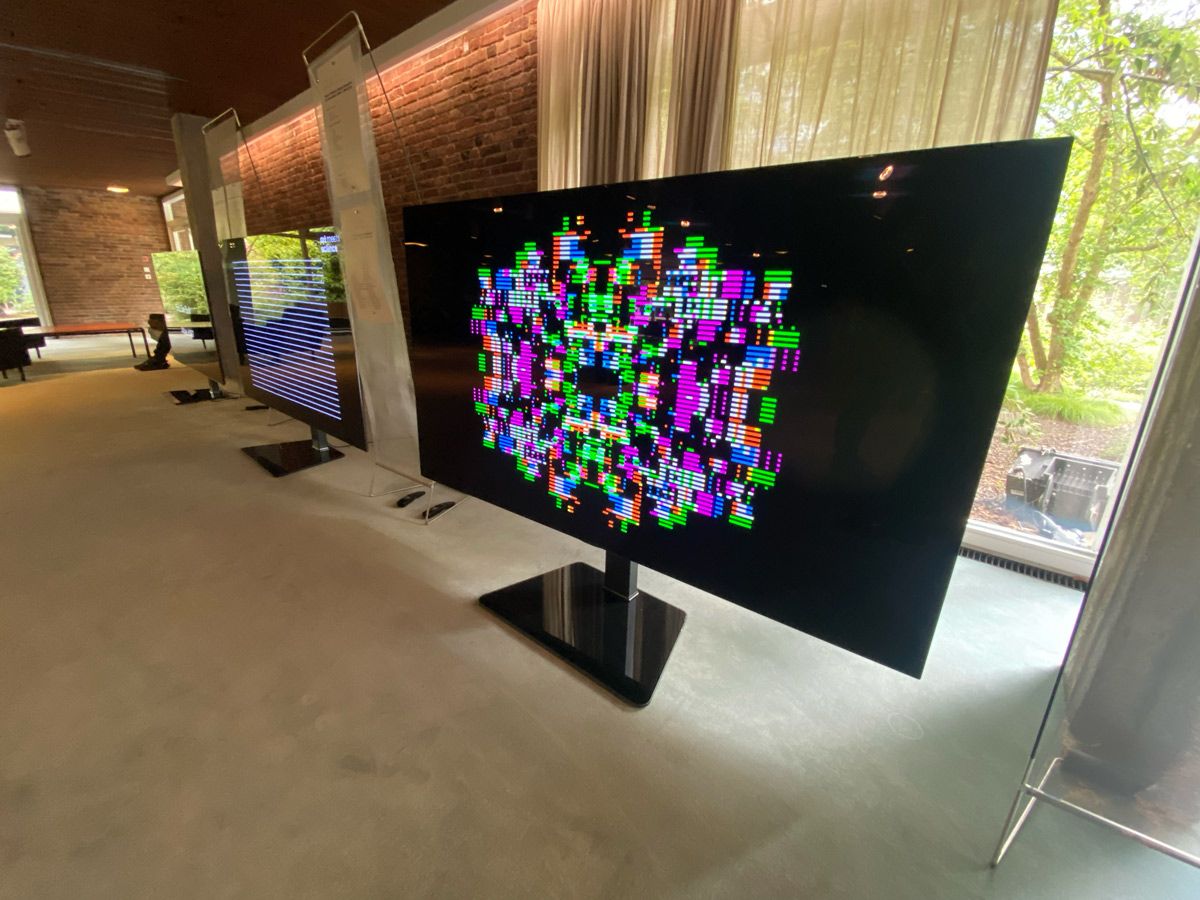
Beyond the core conference, the Generative Art Summit 2024 expanded its scope with a series of parallel events, weaving together historical and speculative perspectives on machine creativity. A special film night traced the evolution of computer-generated animation, presenting a visual archive of algorithmic cinema, while the science fiction performance “Sandfiction 4K: The Orchid Cage” (July 6th) brought Franke’s speculative imagination to life. Timed with the recent publication of a new English edition of The Orchid Cage (Springer, 2024), the performance reexamined his literary visions in the context of contemporary machine intelligence.
Additionally, an exclusive day excursion (July 5th) to Wolfsburg provided invited guests with a rare glimpse into the archives of Institute Heidersberger, home to one of the foundational figures of generative photography. The visit also included a preview of the Foundation’s forthcoming exhibition, “Code – Kunst – Konstruktionen”, a landmark survey spanning seventy years of generative practice at the Städtische Galerie Wolfsburg.
As the summit concluded, it became clear that Franke’s legacy is not merely historical—it is actively shaping the future. The event underscored how generative art, once a niche exploration at the periphery of both science and aesthetics, has now become central to critical debates on artistic authorship, technological agency, and the role of creativity in an increasingly automated world.
With AI now embedded within artistic process and discourse, the fundamental questions that once occupied Franke remain strikingly relevant. If the analog oscillograms of the 1950s represented the dawn of generative aesthetics, today’s experiments with neural networks, large-scale datasets, and blockchain provenance signal yet another paradigm shift. What remains unchanged, however, is the relentless curiosity that drives artists, engineers, and thinkers to expand the boundaries of what is possible.
At The Generative Art Museum, we recognize that this field is still writing its history. The Generative Art Summit 2024 was not just an event—it was a moment of collective thinking, a laboratory for speculation, and a living archive of a movement that continues to evolve. The dialogue is far from over.
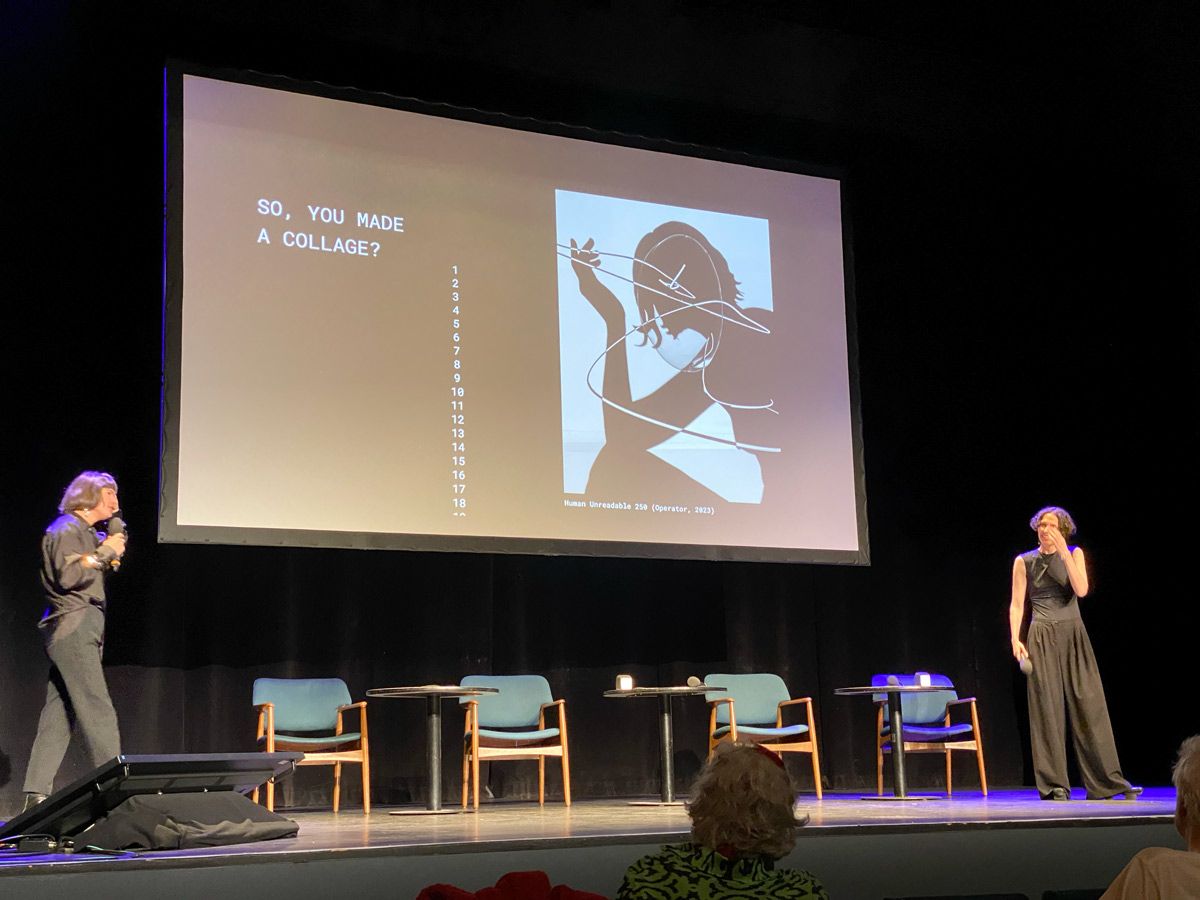
One of the highlights among the many excellent talks was Ania Catherine and Dejha Ti, the duo behind Operator, who delivered a captivating presentation that blended intellect, humor, and artistic vision. They explored how technology can be used as a medium rather than a spectacle, emphasizing depth over dazzle. The artists unpacked the philosophy behind their practice, showing how a clear set of creative “operators” can guide meaningful, emotionally resonant work. Speaking with clarity and confidence, they invited the audience to question their own relationships with tools and systems. Their chemistry on stage made complex ideas accessible, even poetic at times. The presentation’s rhythm mirrored their art: deliberate, layered, and deeply human.
Published: 2024-07-21
Author:
Xavier Hernández