
TGAM Articles
Bootleg Gallery: A review from Art Blocks Marfa Weekend 2025
Its premise was simple: a vehicle that had crossed the desert became a gallery. The trunk opened, and inside it was a compact, improvised exhibition space carrying works by Anna Carreras, Heeey, Paolo Curtoni, Daniel Aguilar, and a selection of pieces connected to Responsive Dreams, TGAM’s Barcelona-based digital arts festival. It was direct, portable, and slightly absurd in the best possible way.
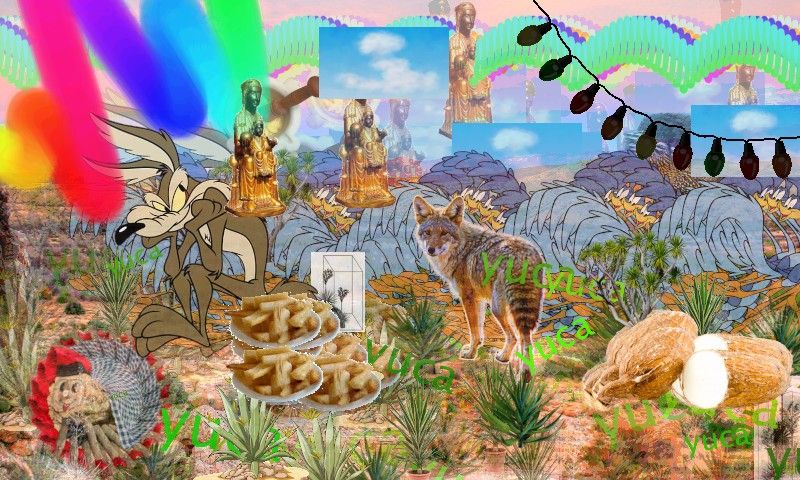
That absurdity mattered. Generative art is often discussed through systems, platforms, provenance, permanence, and technical elegance. The Bootleg Gallery brought it back to encounter. You had to find it. You had to walk up to it. You had to accept that the “gallery” was not a polished room but a temporary condition: a trunk, an alley, a desert evening, a few people gathered around light.
The works made sense in that format because they did not feel reduced by it. Anna Carreras’ Unhinged brought together cultural and visual references from Marfa and Barcelona, producing a restless bridge between two places that are distant geographically but connected here through TGAM’s curatorial voice. Heeey’s And When Rome Falls offered a darker, more emotional register, moving between life, collapse, color, and despair. Paolo Curtoni’s Solid Arguments? approached the grid as a place where perception, language, and illusion begin to interfere with each other. Daniel Aguilar’s Sendas added another layer: a work about paths, decisions, control, chance, and discovery.
Together, these works turned the Jeep into a kind of miniature embassy for generative art outside the expected frame. The strongest aspect of The Bootleg Gallery was not only what it showed, but how it asked to be seen. It refused the clean separation between artwork, viewer, architecture, and street. It turned logistics into atmosphere.
The inclusion of Responsive Dreams was especially meaningful. Art Blocks Marfa Weekend 2025 was filled with projects that examined the relationship between code and physical experience: generative craft, plotted works, interactive installations, live systems, books, textiles, performances, and hybrid objects. Responsive Dreams fit into that conversation naturally, bringing a European festival context into the Marfa ecosystem and showing how responsiveness, animation, and interaction can travel across formats without losing their character.
The live coding performance by Roxanne Harris, gave the Bootleg Gallery one of its clearest moments of presence. Live coding is always partly about exposure: the artist thinks in public, edits in public, risks failure in public. In a weekend that also looked back at five years of Art Blocks and the completion of the Art Blocks 500 era, that kind of vulnerability felt important. It reminded the audience that generative art is not only about outputs, collections, and archives. It is also about process unfolding in real time.
Bootleg Gallery was a reminder that generative art culture has always depended on unofficial energy: side conversations, small experiments, weird formats, improvised displays, shared laptops, projectors, late-night arguments, community rituals, and the pleasure of showing someone something before it has settled into a category.
Its main limitation was also part of its charm. A trunk gallery can be missed. It is fragile, temporary, dependent on timing, attention, and the willingness of people to gather around something modest. That may be the best kind of bootleg: not a copy, but an alternative route.
Published: 2025-10-31
Author:
Xavier Hernández